
WOAMY
Letting customers shape a new material’s development
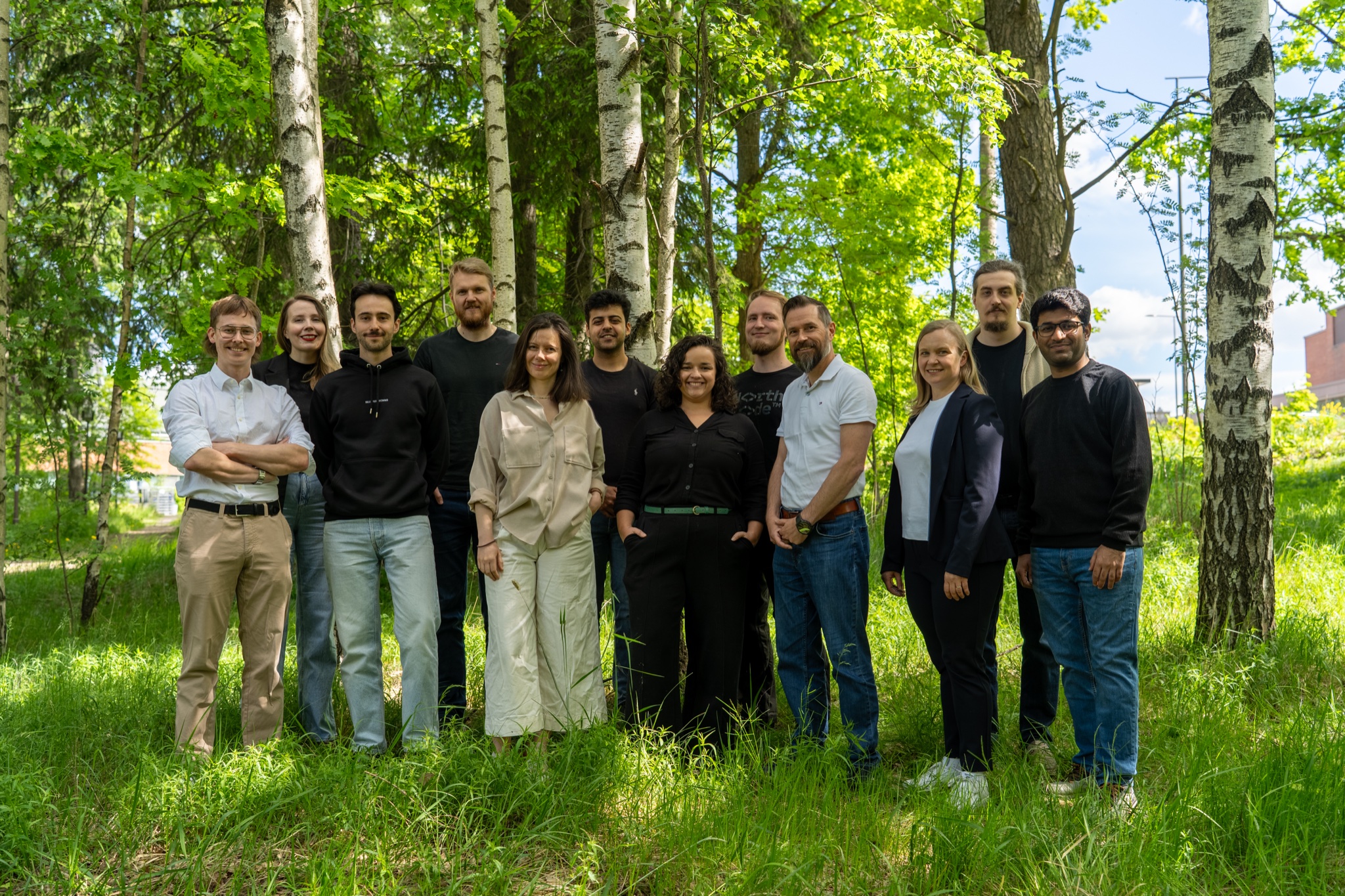
Path makers: Susanna Partanen, Luisa Jannuzzi, Leevi Viitanen, Imola Balogh, Juan Gil Escribano, Akseli Vuorilehto, Matias Parviainen, Eevi Hautanen, Vesa Yliherne, Verneri Mäntysaari, Anmol Bhattarai
Origin
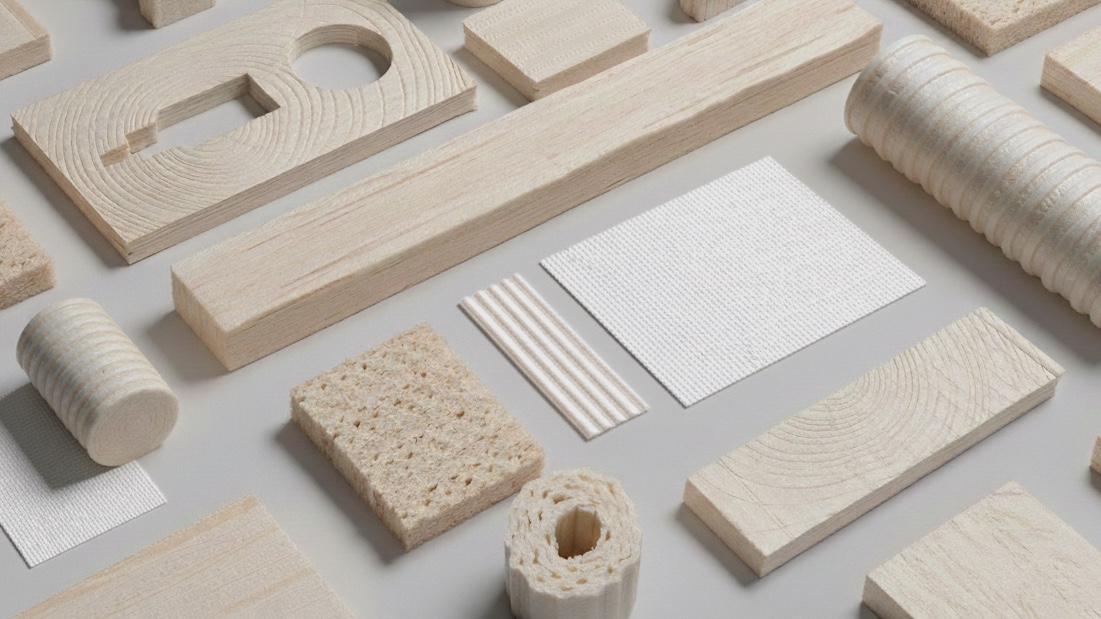
Packaging still relies heavily on fossil-based plastic foams, which are hard to recycle. Because they are light, protective and cheap, they are also hard to replace. Researchers at Aalto University’s Department of Applied Physics spent more than ten years developing a cellulose foam with promising properties, but there was no route to producing it at scale for real packaging. In Aalto Design Factory’s 2021 Product Development Project course (PDP), a student team helped the researchers scale production from the lab to a garage-scale machine. Woamy spun out in 2022, with PDP student engineers among its first hires, and has since grown into a company with 11 employees and around ten recurring customers in a variety of industries.
Key path making practices
Customers from day one
New materials usually follow a long, linear path: perfect the formulation in the lab, scale up production, and only then look for customers. Woamy reversed that order. Because a small-scale production machine already existed when the company started, the team could start working with real customers right away, and launched with its first customer in 2023. It intentionally focused on high-end brands that pay for development, accept small volumes and set a high quality bar, treating them as development partners rather than buyers of a finished product.
Co-creating with a material nobody knows
Customers usually judge a new material from samples and specifications, then decide whether it fits their existing packaging. With a material this unfamiliar, that doesn’t work, because customers can’t imagine what it can do. So Woamy’s designers built the first proof of concept themselves, starting from the function the packaging must perform rather than copying the plastic foam it replaces. Once customers saw what was possible, they became co-designers, sometimes in one- or two-day workshops at Woamy.

“If we had only manufactured the material and offered fixed shapes, probably we would not be in business by now.”
Susanna Partanen, Woamy
Letting customers inform the material development
Customer feedback usually shapes how a material is applied, not the material itself. At Woamy, feedback and requests go into the recipe, the production line or the packaging design, supported by a “yes, and” attitude:

“When you face a problem, you build on an idea instead of discarding it, even if it looks stupid. It may look hard, but if it’s not impossible, maybe there’s a way to do it.”
Juan Gil Escribano, Woamy
This works because the relatively small multidisciplinary team includes materials scientists, engineers, and designers, so feedback can reach whichever part needs to change. For example, when a customer asked for a more paper-like feel, the team increased the fibre content. The new recipe turned out better, cheaper, faster to produce and more recyclable, and is now central to Woamy’s scale-up plan. Customers also redirected the product range, from rigid foams to flexible foams and thin protection sheets.
Impact
Woamy now has around ten recurring customers, including Planmeca, Secto Design and Kyrö, with applications ranging from medical technology to furniture and premium glass packaging. A recent process breakthrough increased production output potential by 75% with the same equipment.
The path made by Woamy’s team offers a model for research spinouts and for established companies bringing a new material or technology to market. Instead of treating market entry as the final step, Woamy shows the value of involving a real customer “earlier than feels comfortable”, and of testing the product and its production together from the start. The requirements that decide whether a new material succeeds often differ from those that seem most important in the lab, and only real use reveals them. The key, in the team’s words, is “a short learning loop between technology, production and real customer use”, repeated before every major scale-up investment.