
UMICORE
The industrial Learning Loop: turning shared learning into industrial impact
Path makers: Janne Marjelund, Arto Fränti, Janne Niittykoski, Mårten Eriksson, Ville Hassinen
Origin
Electric vehicles need batteries that perform better, last longer and cost less, and much of that depends on pCAM: the ‘DNA’ of a battery’s cathode material, defining many of its key properties. Because pCAM quality depends closely on chemical process conditions, product and process can’t really be developed separately. Yet, the traditional sequence is typically like that: develop the product first, then adapt manufacturing to it.
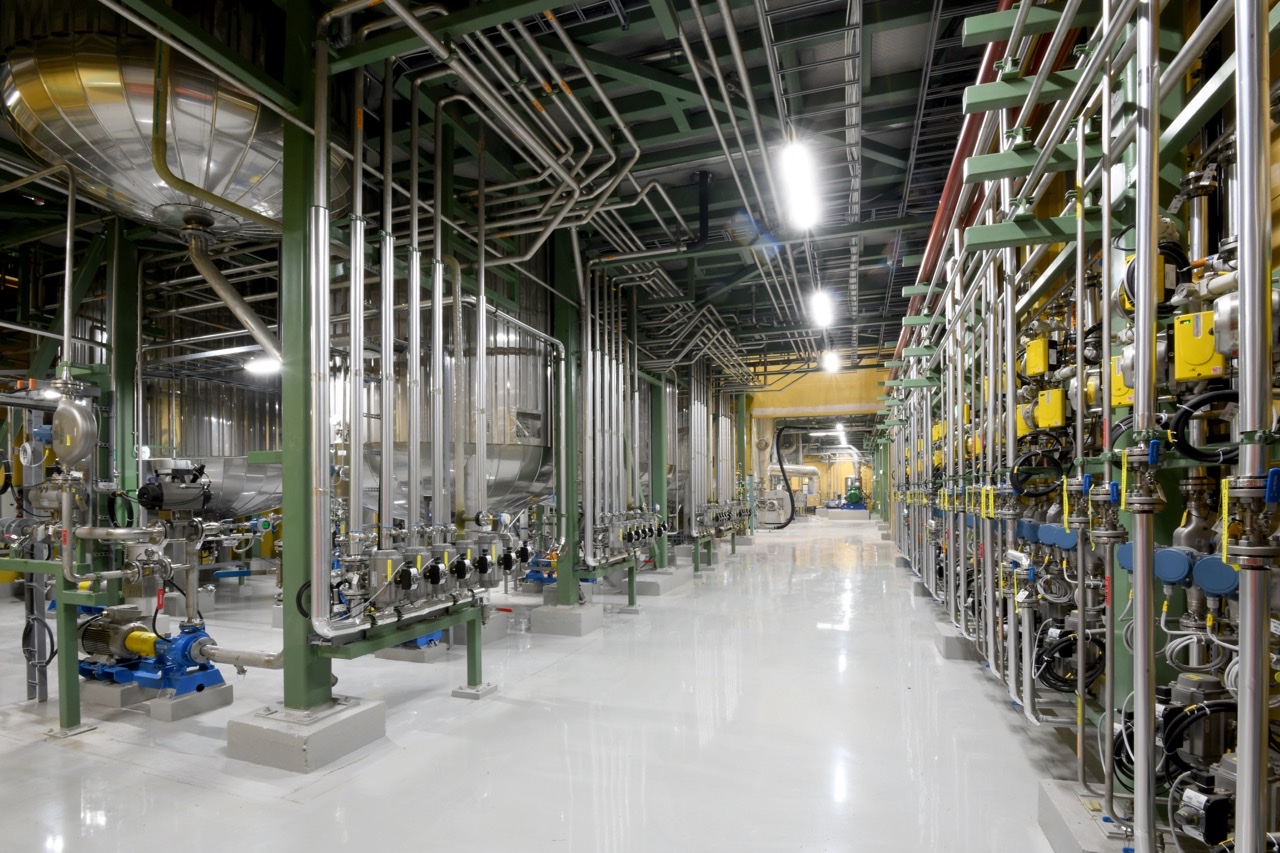
Building on two decades of pCAM experience, Kokkola became Umicore’s global pCAM technology centre in 2020. By developing material, process and production as one system, the team delivered a new technology platform operating on two mass-production lines by 2025.
Key path making practices
The factory as a place to keep learning
Industrial development usually moves step by step: prove a technology in the lab, scale it up in a pilot, then hand it over to production, where development is considered finished. Umicore’s pCAM Technology Team treated each scale as a different learning environment. The lab built scientific understanding, the pilot exposed scale-up behavior, and mass production revealed interactions that can’t be reproduced at a smaller scale. At every stage, the team asked which risks would matter most at industrial scale and for the customer, and tackled those first, while there was still time to change course. Lessons also flowed back: issues fixed while commissioning the first production line were carried over to the second, which ramped up more smoothly.

“It’s the small things which matter: small lessons learned, small details from product, from process. When you build up these small details together, that’s the know-how that makes the whole business successful.”
Arto Fränti, Umicore
From one-person projects to a sharing culture
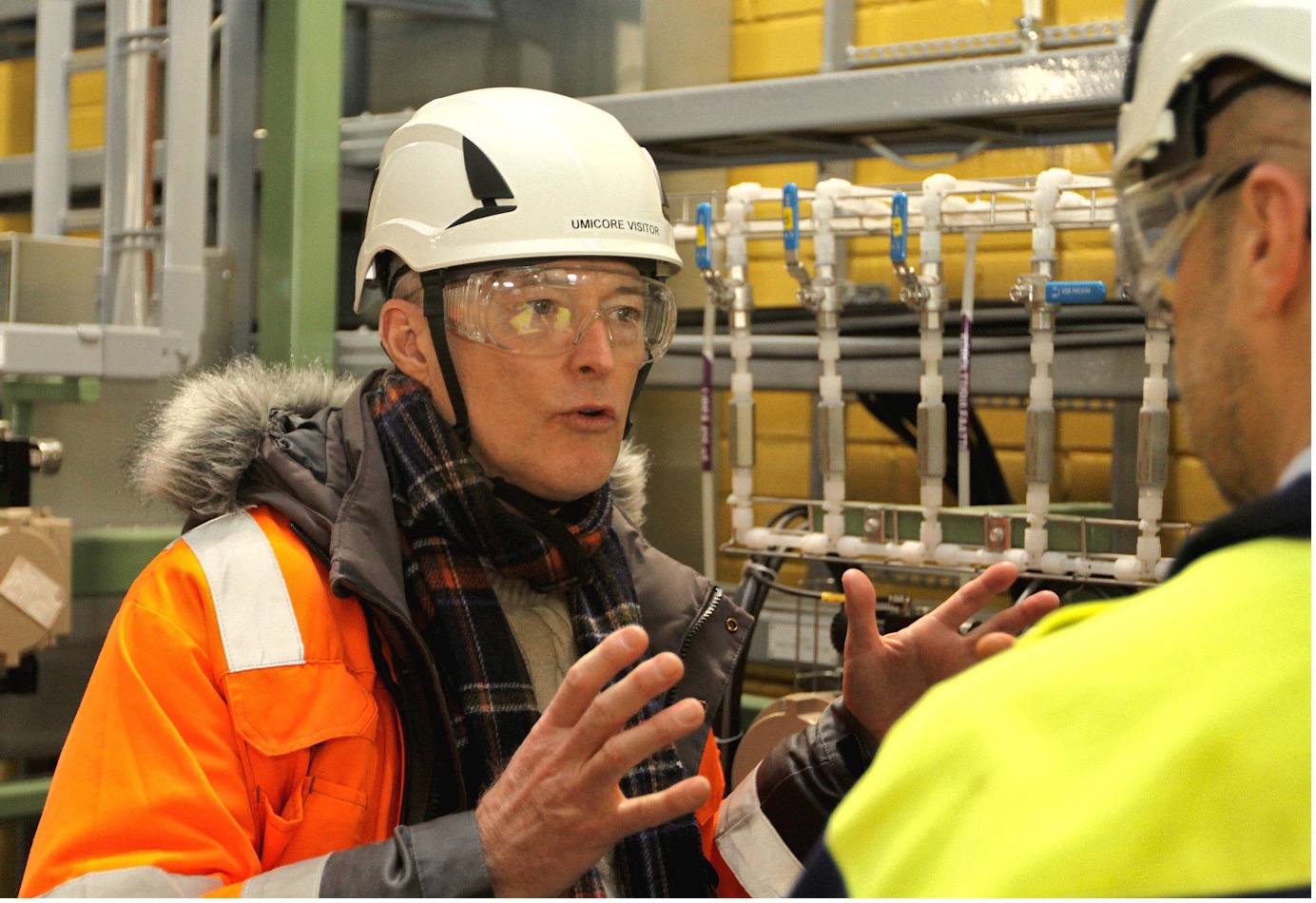
In many organizations, a project belongs to one person, who carries it from start to finish and hands it over at the end. The Kokkola team used to work that way too. Over time, it built a culture in which people openly share problems they can’t solve alone, and colleagues help even outside their own expertise. It started with someone being willing to show vulnerability.

“Somebody needs to open up to share the challenge. It’s more vulnerable to share challenges we don’t know how to solve by ourselves, but once that started, sharing became automatic.”
Janne Marjelund, Umicore
Owning the whole path as a team
Large organizations need clear roles and accountability to manage complex projects. The Kokkola team found that this clarity worked best when combined with collaboration across functions and shared responsibility for the overall result. Its people work across lab, pilot and production, so lab work already anticipates production problems, and experts cross boundaries: automation engineers understand the chemistry, and vice versa. Responsibilities are defined at team level, information is open to everyone, and newcomers learn the way of working through mentoring. When the site became part of Umicore, the team held on to this way of working, now transferring the learning to colleagues and projects across the wider organization.
“If we had had very strict RACI matrices, we would never have been able to make this happen. Clear accountability remained important, but roles were not allowed to become boundaries. People contributed beyond their formal responsibilities whenever their expertise could improve the overall solution.”
Arto Fränti, Umicore
Impact
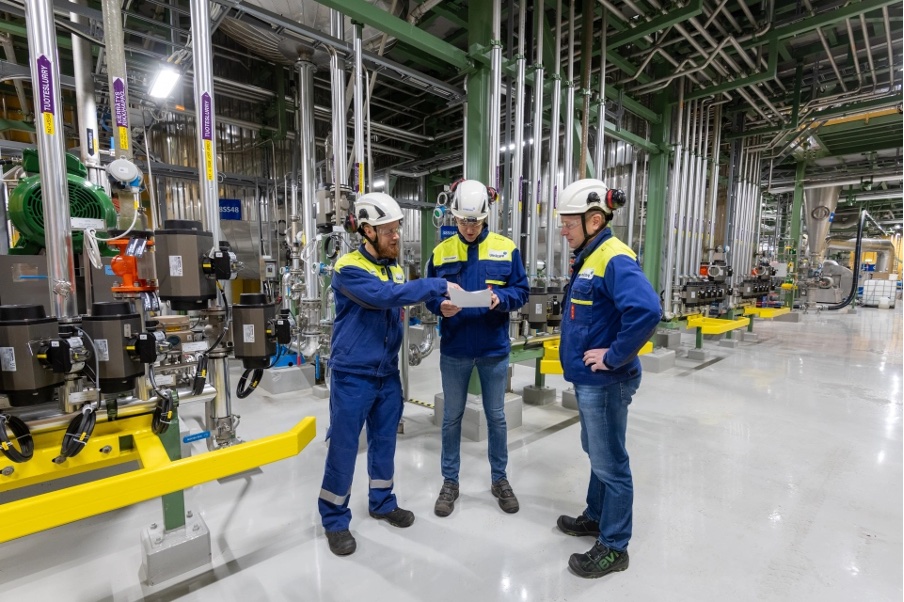
The new pCAM platform runs on two mass-production lines in Kokkola, built, commissioned and ramped up by 2025, with both lines reaching their target capacity. Compared with the previous technology, it delivers about +200% production capacity, −30% energy and water saving and nearly 40% unit cost saving. The highly automated production line can be managed by one primary operator per shift. The resulting production concept provides a scalable foundation for future pCAM plants and technology deployments.
For others, especially in process industries where product performance depends on manufacturing conditions, Umicore’s team shows that the factory isn’t where development ends. Their advice is to bring product, process, scale-up, engineering and operations together before the core concept is fixed, and to start small: one shared challenge, one critical assumption about manufacturing tested at the right scale, one learning cycle. And to ask not only “Can we make it?” but “Can we manufacture it reliably and competitively at the required scale?” The culture behind it can’t simply be copied, but it can be started: by someone willing to share a problem they can’t solve alone.