
BOROUGE INTERNATIONAL
Learning at every step of scaling up a new technology
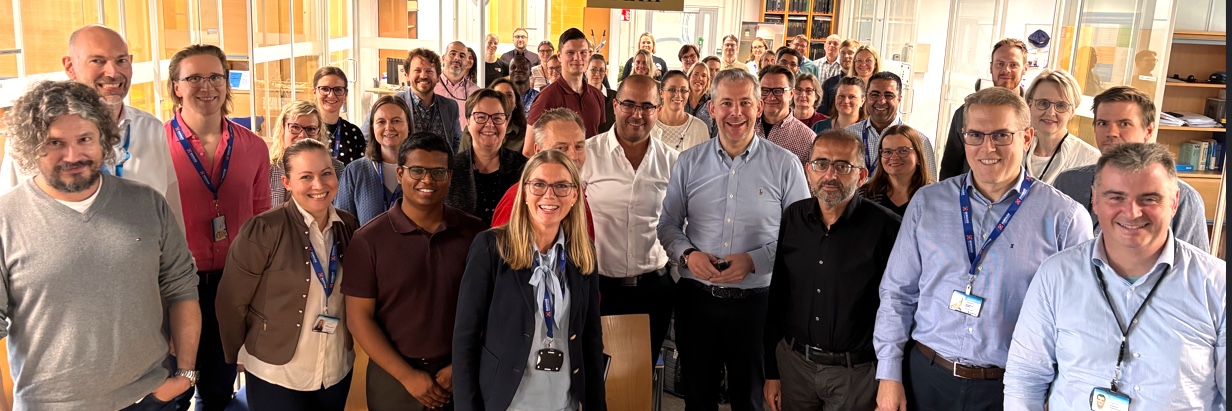
Path makers: Pascal Castro, Esa Kokko, Juulia Hirvonen, Jarkko Hassinen, Katri Nikkilä, Soile Lustig, Emilia Tiitinen, Ville Virkkunen, Ashwani Nandanwar
Origin
Conventional polypropylene forced trade-offs: a single grade could rarely combine high purity, clarity that survives sterilisation, low-temperature sealing and good processability. Packaging therefore relied on multilayer structures combining different polymers, which are hard to sort and recycle. That clashes with the EU’s Packaging and Packaging Waste Regulation (PPWR). A new family of single-site catalysts could remove these trade-offs, but only if it could be taken reliably from the lab into large, continuous commercial plants. That was the core development challenge. The company built a dedicated catalyst plant in Porvoo, home to the group’s catalyst and process development, in parallel with process and product development. Borstar® Nextension PP launched in 2022, and in 2026 the company committed to expanding production.

Key path making practices
A platform instead of a product
New polymer grades are usually developed one at a time, each as a separate project. The team instead combined the existing Borstar® production process with the new catalyst family to create a platform that can be tuned into many tailor-made grades for packaging, healthcare, mobility and fibres. Catalyst, process and product were developed simultaneously, which is why the catalyst plant in Porvoo was built while development was still ongoing. This is possible because Borouge International has the whole chain in-house: catalyst production, laboratories, pilot plants, commercial plants and customer relationships. Few competitors have that, and it lets the team move between scales, and innovate, faster.
Failing fast at every scale
In process industries, scale-up is often treated as confirming what the lab has already shown. The team learned that catalyst behaviour in the lab doesn’t always work the same way in pilots and commercial reactors, so it planned each step, from lab to pilot to plant, as an experiment with its own learning goals. Early grades went to customers to test in real applications.
“We fail fast, learn faster, and turn those lessons into quicker implementation.”
Pascal Castro, Borouge International
Bringing everyone along
Existing products can be developed within departments, but a new platform can’t. Research, scale-up, application, operations, product, marketing and strategy worked as one team, with a steering group of representatives from each function focused on the end goal. Just as important was earning buy-in at every go/no-go moment. When one part of the scale-up chain struggled, the team went back to the fundamentals to prove the cause before asking for another attempt. Moving to full scale meant convincing decision-makers to invest, and in summer 2025 one key product had to be demonstrated at pilot scale, or “the whole idea would have collapsed.” Each time, solid data made the case, and visible progress kept the team motivated through setbacks.

“There’s the technical side of the work and the non-technical side of it. Both should come together to go forward.”
Ashwani Nandanwar, Borouge International

Polypropylene grades based on Borstar® Nextension Technology offer outstanding packaging efficiency and product safety. © Borouge International
Impact
Borstar® Nextension PP has delivered several commercial grades, including sealing and thin layers for recyclable mono-material food packaging and nonwovens that use less material. It allows mono-material packaging to replace multilayer solutions, helping customers meet the EU’s new packaging rules. In 2026, the company committed €49 million to expand commercial production in Burghausen, Germany, while new grades continue to be scaled up through the pilot facilities in Porvoo.
For others, especially in large process industries, the team shows that scale-up is where real development happens. Its advice: define the end-use requirement and its end of life before choosing the technology route, and test early material with a few real customers. Then plan scale-up as a series of small, deliberate experiments, from lab to pilot to a short plant campaign, with clear learning goals for each step, and keep one multidisciplinary team responsible across all stages.