
VAISALA
Curious enough to start, brave enough to pivot, even after 90 years
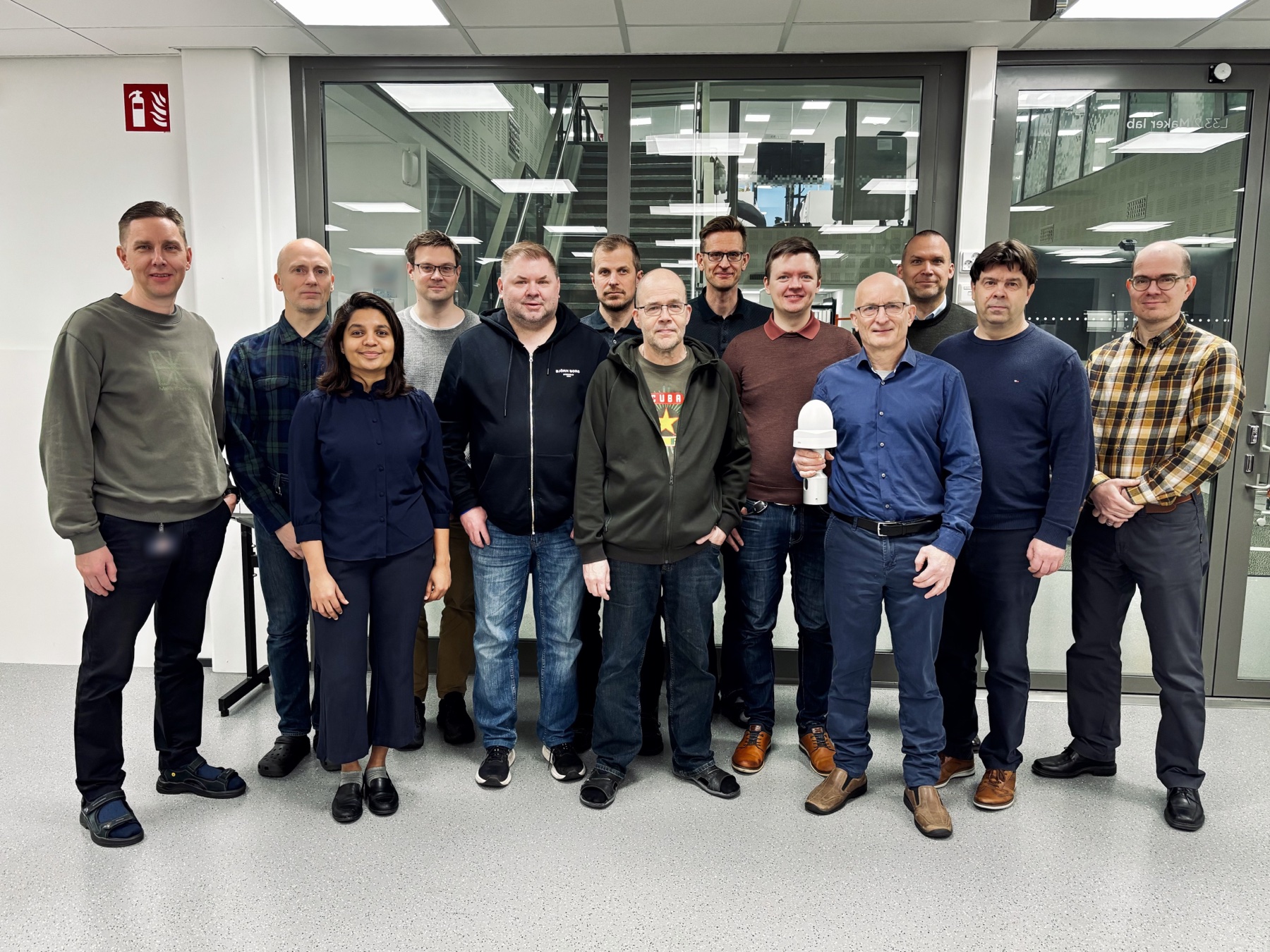
Path makers: Mikko Krapu, Samuli Laukkanen, Petri Hautaniemi, Reino Keränen, Jarmo Räisänen, Lashani Wickramanayake, Lasse Kauppinen, Klaus Heyn, Hannu Lähteenmäki, Juha Lampinen, Henri Niinivirta, Ville Ojaniemi, Tom Ahola, Tuomas Latvala, Nina Godenhjelm, and Lauri Peltosaari
Origin
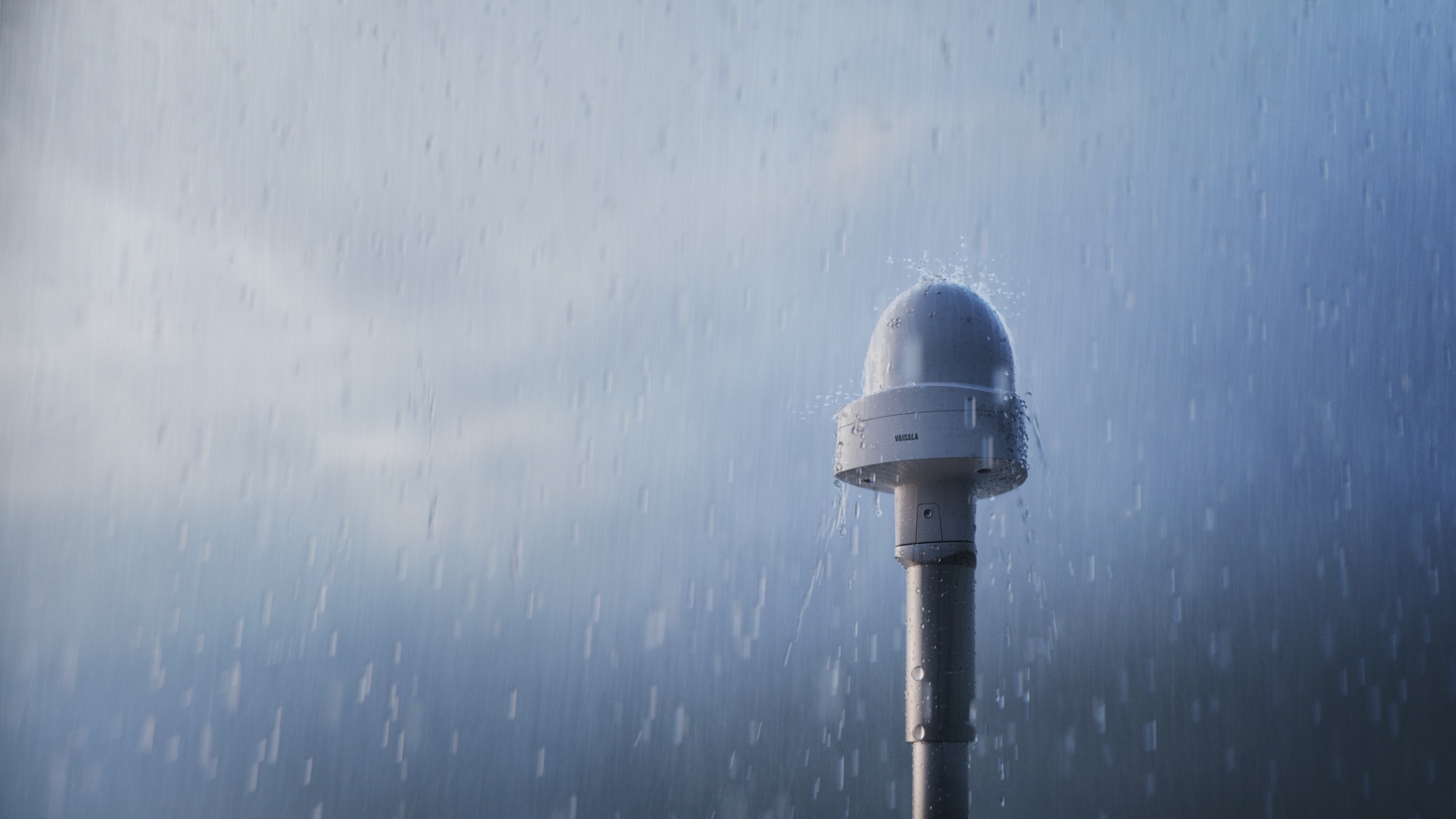
Most rain gauges collect the water. They clog with dirt and need constant field maintenance, so measurement networks stay sparse. Because rainfall can vary a lot over short distances, sparse networks give an incomplete picture, which matters for flood warnings, weather forecasts and climate adaptation. Wind also blows raindrops past the gauges, causing errors of up to tens of per cent.
In 2017, Vaisala’s research team ran a small, time-boxed experiment to get to know millimetre-wave radar, a radio technology new to the company. It looked promising enough to grow into an internal research project, ultimately leading to a maintenance-free radar precipitation sensor.
Key path making practices
Learning before deadlines
Large companies usually ask R&D to prove itself early, against schedules, budgets and business cases. Vaisala matures ideas. Once an idea shows promise in a small, time-boxed experiment, it enters a maturation phase judged on learning, not yet on schedule or budget. The team agrees the maturity criteria for each gate in advance, and the project moves forward only when it meets them.
Success means reaching a “sweet spot”: being able to explain why one technical option best fits customer and business needs. Only at productisation do schedule and budget become the main measures. For RM60, this meant giving a new technology around five years to mature into the right product vision, rather than rushing the first idea to market. The project was also one of the first to go through the complete maturation process, helping to shape it along the way.
Letting customers change the vision
Research teams often refine their own idea first and validate it with customers once the concept is fixed. The RM60 research team had its own initial hypothesis too. The team started meeting with customers at an early research stage and kept working with them throughout the project, from finding pain points to validating the concept. In total, they worked with around 30 organisations and 150 people. Early on, customers pointed the team to an unsolved problem that differed from its initial idea. Instead of defending their original vision, the team members let go of it entirely, moving to a different application and a product different in almost every way. That took real openness: the team was willing to be proven wrong about its own idea, and to change course.
“Customers won’t hand you the solution, but they will show you the problem. Go and see where it hurts, then be brave enough to let what you find change your direction.”
Mikko Krapu, Vaisala
Proving it in the field, not just the lab
Instrument makers usually prove new products through laboratory type-testing. Yet you can’t recreate natural rain in a lab, so the team built its own test fields in Malaysia, the USA and Finland, plus a fourth together with a customer, gathering more than 700,000 sensor hours before launch. Conditions in Malaysia proved harsher than any of Vaisala’s lab tests. The field work started early enough for the team to act on it in time, and these findings are now improving how Vaisala tests its other sensors too.
“It meant a lot of extra work: building test sites, collecting data, analysing everything. Yet it was part of the product, not a side job. Now we can show customers the evidence.”
Petri Hautaniemi, Vaisala
Impact
RM60 is the world’s first truly maintenance-free radar precipitation sensor. Weather and hydrology services can now place sensors where maintenance visits never made sense, because RM60 counts individual raindrops, calibrates itself and operates without heating through snow and ice. Denser networks mean a sharper picture of rainfall, and earlier flood warnings for the communities downstream. The project also produced several patents and global test sites that Vaisala can use for other products. Customer deliveries began in September 2026.
The RM60 team built this approach on lessons from earlier projects. It worked. The early redirection was the only major pivot, and every later change was a small adjustment. They advise making room for “low-bar experiments” to make first contact with new technologies:
“Be curious enough to start the experiment!”
Samuli Laukkanen, Vaisala
They also suggest validating the product vision early, with research and product management going to see customers’ pain points together. Customers don’t need to see the technology at that stage, only to talk about their unsolved problems, what matters and what they would pay for. When a technology is new, prove it where people will use it, not only in the lab.