
HAKOLA
Co-creating furniture on the factory floor
Path makers: Annaleena Hakola, Matti Puomio, Anne Kytöharju, Petra Lassenius, Salla Kangasniemi
Origin
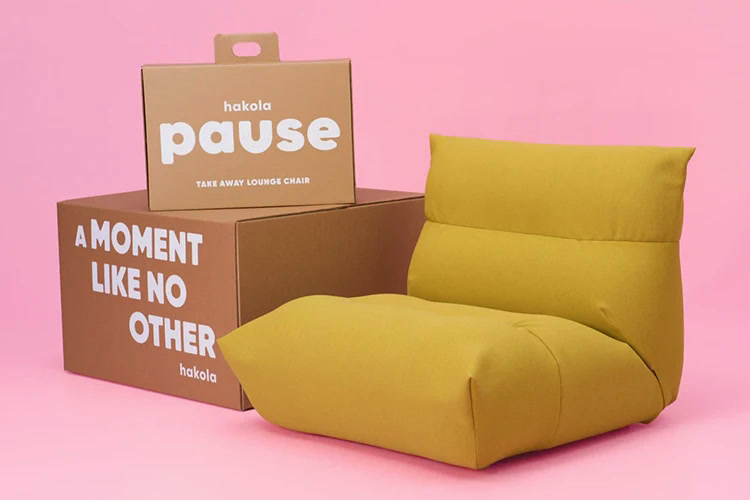
Hakola mainly sells sofas in Finland, directly to customers and without resellers, avoiding markups of up to 60%. That makes exporting hard: sofas are bulky, and Hakola has to handle the logistics itself. Shipping one finished sofa to Denmark, for example, costs around €800. At the same time, international online retailers had set customer expectations at delivery within days. Upholstered furniture is also hard to maintain and recycle, because parts made of different materials are usually glued or moulded together. Hakola wanted a piece that is easy to ship, repair and recycle, and customers had asked for low seating for the home. Pause became possibly the biggest investment in Hakola’s history, and all other development projects were put on hold. Development started in early October 2025, production began about eight months later, and Pause, a modular “takeaway lounge chair” sold flat-packed from stock, with every part replaceable, launched in September 2026.
Key path making practices
Designing with the value chain
In the furniture industry, designers, technical designers and production often work in separate silos, passing versions back and forth. Hakola normally develops in-house. For Pause, the core team combined the two freelance designers with Hakola’s internal design team—all with backgrounds in design—creative director, chief operating officer and creative development manager. As the work progressed, the team grew to include the frame maker, the moulded-foam manufacturer, upholsterers, cutters, and assembly and packaging staff. Their aim was to achieve easier logistics, low and relaxed seating, and a long, repairable lifecycle, which they explored with the entire team.

“You need to adapt the process to the project and be really smart about how you do it.”
Matti Puomio, Design Developer
Co-creation workshops on the factory floor
With around eight months until production, working in sequence was not an option. Instead, the team met for one- or two-day workshops at the Hakola factory. They carved foam by hand, scanned it straight away with AI-assisted photogrammetry, updated the 3D model, gave the cutter new drawings and tested the result, completing several rounds in a single day. Factory staff from outside the project tested the prototypes, deliberately covering a wide range of body sizes, and packaging staff tried assembling the chair at home. Each run of prototype moulds produced nine variations in foam softness, so the team could compare many options at once.
Shared ownership across the company
The workshops did more than speed up design. Hakola’s owners and top management joined them at times, and separate workshops with the sales team defined the selling points while the product was still being developed. Throughout the development process, the creative development team also focused heavily on strong concept thinking—connecting packaging design with the familiar “takeaway” culture from cafés to build genuine customer interest and create an engaging launch experience. This kind of involvement built ownership: because production, marketing and sales staff co-created the product, they got excited about it, contributed ideas and kept solving even small problems that appeared after launch.
“Building ownership for the product is so easy when they feel like they’re working on it with you, and they are actually working on it with you. Many of the ideas really come from the manufacturing side.”
Matti Puomio, Design Developer
Impact
Pause launched at the Habitare fair in September 2026, and the stock of 100 pieces reserved for its first months sold out immediately. According to the team, it met its targets for maintainability, recyclability and sales, and the overlapping iterations sped up design by months. Pause is now set to take Hakola abroad, starting with Europe.
For others, especially in traditional manufacturing, Hakola shows that agile ways of working can be successfully adapted into traditional industries. The team’s advice is to adapt the method to the product rather than copying a template. Bring manufacturing knowledge into design from day one, make the factory floor your prototyping space, and let the people who will build and sell the product help shape it.